
Team
The Leibniz ScienceCampus EcoPath is a strong, regionally anchored and interdisciplinary research network in Lower Saxony, connecting Leibniz institutes, universities, and agricultural enterprises in Braunschweig, Göttingen, and Hannover and neighboring areas. As such, EcoPath brings together six core institutions integrating high-profile veterinary and agricultural expertise with stronghold partners in microbial pathogenesis, ecology, evolution, molecular and systems biology and modelling. This cross-disciplinary structure is best suited to tackle the EcoPath`s overarching goal of elucidating the evolutionary ecology of zoonotic pathogens during agricultural transformations.

Prof. Dr. Ulrich Nübel
Spokesperson
Leibniz Institute DSMZ, Braunschweig
Microbial Genome Research- - Pathogen evolution and spread
- - Antimicrobial resistance in the environment
- - Novel antibiotics
- - Sharing of microbes between livestock and humans
- - Databases for genomic surveillance

Dr. Cecilia G. Flocco
Scientific Coordinator
Leibniz Institute DSMZ, Braunschweig
Microbial Ecology and Diversity Research- - Environmental Microbiology and Biotechnology
- - Microbial Ecology and Biodiversity
- - Human and Planetary Health
- - Interdisciplinary and Integrative Research
- - Science Policy and Management

Prof. Dr. Melanie Brinkmann
Principal Investigator
Helmholtz Centre for Infection Research, Braunschweig
Virology and Innate Immunity- - Innate immune responses to viral infection
- - Viral countermeasures of innate immunity
- - Innate immune responses as barrier of zoonotic spillover events
- - Chronic viral infections
- - Spatial and temporal dynamics of viral infections

Dr. Damien Finn
Principal Investigator
Johann Heinrich von Thünen Institute, Braunschweig
Institute of Biodiversity- - Physiology and genetics of soil prokaryotes
- - Theoretical microbial ecology
- - Soil biogeochemical processes
- - Environmental metagenomics

Univ.-Prof. Dr. Ralph Goethe
Principal Investigator
University of Veterinary Medicine Hannover
Institute of Microbiology- - Host pathogen interaction
- - Nutritional immunity
- - Metabolic adaptation of bacterial pathogens to the host
- - Bacterial stress response and metal homeostasis

Prof. Dr. Isabel Hennig-Pauka
Principal Investigator
University of Veterinary Medicine Hannover
Field Station for Epidemiology- - Porcine health management
- Infection dynamics in swine
- - Swine medicine
- - Diagnostic of infectious diseases
- - Pathogen-host-environment interactions

Prof. Dr. Dieter Jahn
Principal Investigator
Technische Universität Braunschweig
Institute for Microbiology- - Bacterial heme biosythesis
- - Infection biology of P. aeruginoas and C. difficile
- - Gene regulation of marine Dinoroseobacter shibae
- - Bioinformatics of bacterial gene regulation
- - Microbial Biotechnology
Prof. Dr. Meina Neumann-Schaal
Principal Investigator
Leibniz Institute DSMZ, Braunschweig
Metabolomics- - Bacterial and archaeal metabolism
- - Anaerobic metabolism
- - Host-pathogen cross-talk
- - Bacterial stress responses
- - Metabolomics and flux analysis
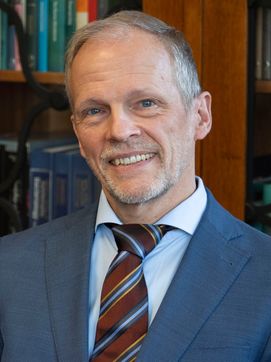
Prof. Dr. Jörg Overmann
Principal Investigator
Bavarian State Collections of Natural History, Munich
- - Microbial ecology
- - Bacterial functional diversity
- - Bacterial population genomics
- - Mechanisms of microbial diversification
- - Microbial interactions

Prof. Dr. Stefan Pöhlmann
Principal Investigator
German Primate Center - Leibniz Institute for Primate Research, Göttingen
Infection Biology

Prof. Dr. Christoph Tebbe
Principal Investigator
Johann Heinrich von Thünen Institute, Braunschweig
Institute of Biodiversity- - Soil microbiology
- - Environmental risk assessment
- - Molecular ecology
- - Agricultural ecology
- - Genetically modified organisms

Dr. Fereshteh Ghazisaeedi
Junior Principal Investigator
University of Veterinary Medicine Hannover
Institute of Microbiology- - Gut microbiology, microbiota & host–microbe interaction
- - Veterinary and translational infection biology
- - Bacterial metabolic adaptation
- - Antimicrobial resistance
Dr. Markus Hoffmann
Junior Principal Investigator
German Primate Center - Leibniz Institute for Primate Research, Göttingen
Infection Biology- - Zoonotic viruses
- - Virus-host interactions
- - Antiviral strategies

Dr. med. vet. Frederik Kiene, PhD
Junior Principal Investigator
University of Veterinary Medicine Hannover
Field Station for Epidemiology- - Veterinary epidemiology
- - Pathobiome analyses
- - Diagnostics of infectious diseases

Dr. Baxolele Mhlekude
Junior Principal Investigator
Helmholtz Centre for Infection Research, Braunschweig
Virology and Innate Immunity- - Induction and evasion of innate immune responses by the viruses
- - Epigenetic and transcriptional responses to viral infections
- - Genetic adaption of viruses to antivirals

Dr. Selma Vieira
Junior Principal Investigator
Leibniz Institute DSMZ, Braunschweig
Microbial Ecology and Diversity Research- - Drivers of soil microbial community assembly
- - Plant-associated microbial communities
- - Bacterial cultivation

Milan Borchert
Doctoral Researcher
Johann Heinrich von Thünen Institute, Braunschweig
Institute of Biodiversity- - Microbial ecology
- - Soil microbiome and immunity
- - Enterococcal interaction with the environment

Messaouda Bouchra Chaguetmi
Doctoral Researcher
University of Veterinary Medicine Hannover
- - Environmental Stress driven evolution of Enterococcus faecium isolated from livestock
- - Impact of stressors driven evolution of virulence traits of Clostridioides difficile in co-infection with Enterococcus faecium

Chiara-Sophie Epifanio
Doctoral Researcher
Leibniz Institute DSMZ, Braunschweig
Microbial Ecology and Diversity Research- - Persistence and adaptation of pathogens in environmental reservoirs
- - Evolution of pathogen transmission and the role of livestock farming

Nicole Moor
Doctoral Researcher
German Primate Center - Leibniz Institute for Primate Research, Göttingen
- - Viral entry mechanisms of porcine coronaviruses
- - Virus-host interactions of porcine coronaviruses
- - Diversity of porcine coronaviruses in Lower Saxony, Germany

Laura Müter
Doctoral Researcher
University of Veterinary Medicine Hannover
Field Station for Epidemiology- - Diagnostics of infectious diseases
- - Working toward board certification in porcine health management
- - Veterinary epidemiology

Elise Opitsch
Doctoral Researcher
Helmholtz Centre for Infection Research, Braunschweig
- - Innate immune responses to viral infections
- - Innate immunity restricting zoonotic spillover
- - Viral mechanisms antagonizing host innate immunity

Fabian Poth
Doctoral Researcher
Technische Universität Braunschweig
Institute for Microbiology- - Diversity and phenotypic heterogeneity among Clostridioides difficile isolates
- - Response and adaptation of Clostridioides difficile to environmental conditions
- - Metabolomics in controlled environmental systems

Friderieke Schwarzer
Doctoral Researcher
Leibniz Institute DSMZ, Braunschweig
Microbial Genome Research- - Genomic and metagenomic analyses
- - Enterococcus phylogeny, transmission and antibiotic resistance determinants
- - Publicly accessible Enterococcus genome database